Winter driving can be a stressful prospect, even for a seasoned Midwesterner. Icy roads, dead batteries and frost covered windshields add an extra layer of frustration to a morning commute. However, with a little preparation and a shift in mindset, you too can conquer the winter roads and arrive at your destination safe, happy, and perhaps even on time!
What I have outlined is just a brief summary on the subject of winter driving. There is a vast pool of information on the topics below that we’ll only scratch the surface of. Feel free to consult experts where necessary, such as getting your car prepared for winter. Take these recommendations with a grain of sidewalk salt and proceed at your own risk. That being said, I think that getting prepared for winter driving can be distilled into three categories: preparing your mindset, preparing items to keep in your car for everyday and emergency use, and preparing the car itself for winter. Let’s roll!
Grand Forks Winter Driving Tips: Shift Your Mindset
Winter driving isn’t only about keeping critical items in your car and winterizing your vehicle. It’s also about thinking ahead, modifying your routine and changing plans when necessary. Below are a few simple (and free!) actions that can be taken to help mitigate risk.
Keep Your Cellphone Charged: Keeping your cell phone charged, especially when heading out of town is a simple precaution you can take when winter driving. Being able to contact someone in case of trouble could help prevent an icy walk to the nearest town.
Keep a Full Gas Tank: I’ll admit it, I’m guilty of “I should have enough in the tank-itis”. It can be hard to stop for gas when you’re on a mission and already running late. Take the time and fill up and don’t play the gas gauge lottery.
Let People Know Where You’re Going: It might sound extreme but notify someone of where you’re going and when you plan to be back. It is a simple precaution you can take to make sure you’re missed if you run into trouble on the roads.
Watch the Weather: Simply put, if you can delay non-essential travel during bad weather, it’s wise to do so. Why put yourself at risk if you don’t have to?
Drive Conservatively: Slick roads mean less traction and increased stopping distances. Brake earlier and apply the gas pedal gradually. The goal is to avoid spinning your wheels, sliding through intersections and ending up in a ditch
Grand Forks Winter Driving: Items to Keep in Your Car
A little preparation can go a long way to keeping you both comfortable and safe while driving in the winter. Keeping a few critical items in your car will help make the everyday tasks of commuting and running errands easier and could mean the difference between getting stranded and getting to your destination on time. These items can be divided into two broad categories, “Everyday/Frequent Use” and “Emergency Use”. It’s worth mentioning that many of the emergency items are only useful in the hands of a knowledgeable user so do your research!
Everyday and Frequent Use Items
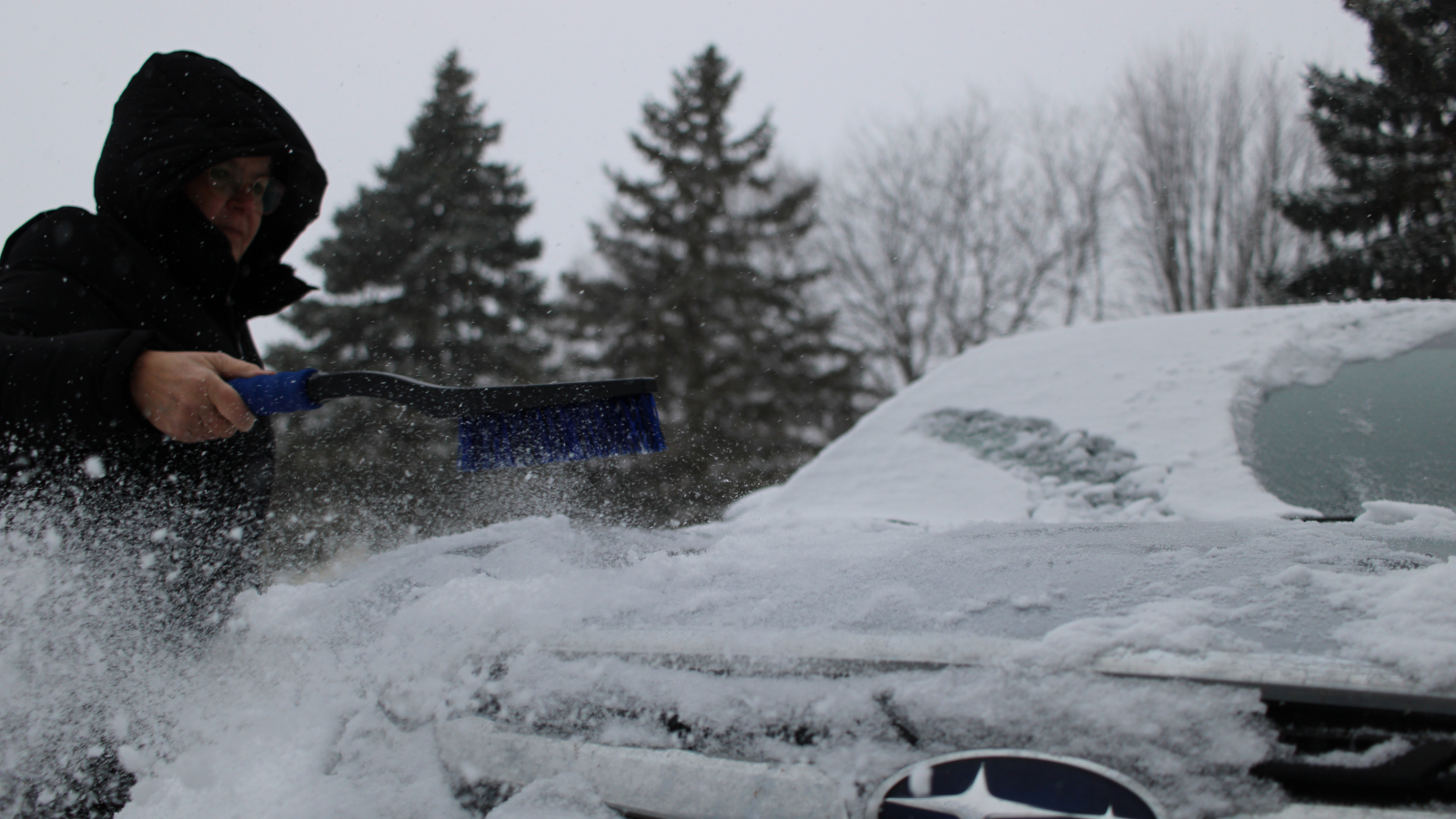
Car Brush and Window Scraper: If you live in North Dakota and you do not own a car scraper and snow brush combination you should stop reading this article and purchase one right now! Clearing your car of snow and frost before driving is an important safety procedure before setting off. It not only improves your visibility, but that of others as well. It’s no fun being behind a car and having snow blow directly into your windshield.
Hat and Gloves: If you don’t typically carry a hat and gloves on a day-to-day basis, consider keeping them in your car. They’ll help keep you warm while scraping your windshield, filling up with gas, or commuting. If you do get stranded or another roadside emergency befalls you, these affordable items will help keep you more comfortable until help arrives.
Boots, Traction Aides or Overshoes: These items can help make the trek to your car drier, less slippery, and keep your shoes dry and salt free. Say goodbye to embarrassing salt-stains on your wingtips!
Headlamp or Flashlight: A portable source of illumination can make common tasks such as checking your oil, filling your tires, or tying a Christmas tree to your roof much easier. As a bonus, when you use your flashlight or headlamp frequently, you know the batteries are charged.
Remote Car Starter: This is more of a luxury item, but it can definitely help ease the pain of an early morning winter commute. I don’t have a remote starter so I can only speculate but I assume that getting into a warm car on a cold day would make you feel a bit like royalty.
Emergency Use Items
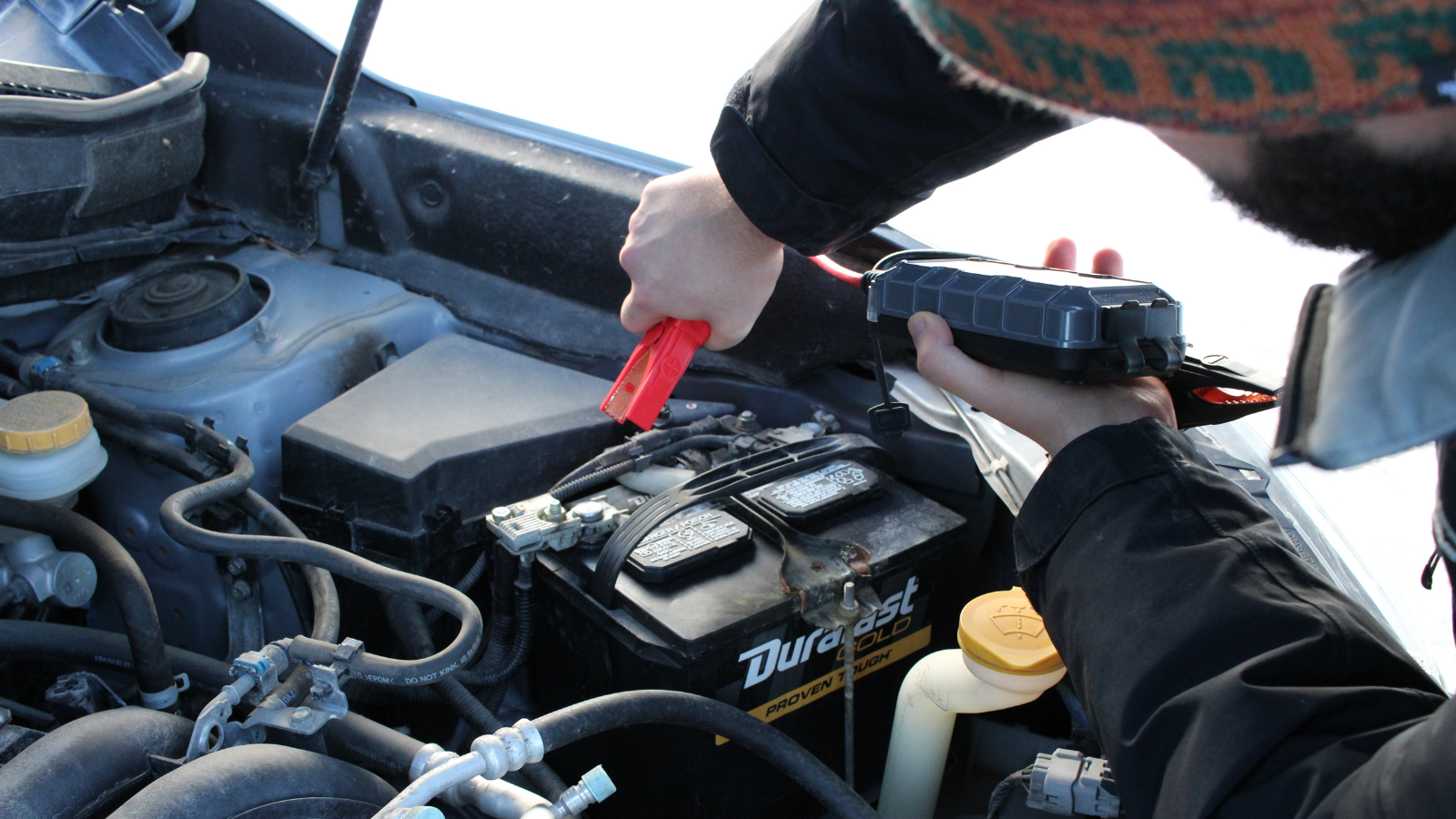
Jumper Cables or Portable Jump Pack: Having jumper cables or a portable jump pack in your vehicle might not only help you out of a jam, but it could also make you some friends! In the dead of winter, it seems like someone always needs their car to be jumped. Owning jumper cables and knowing how to use them may help prevent you from getting stranded but might also help make a neighbor or stranger’s day if you provide them with a jump.
Folding Shovel: This item could mean the difference between extricating your vehicle from a snow drift by yourself or having to call a wrecker. A folding shovel comes in handy when your car’s tires aren’t making contact with solid ground, or when there is so much snow jammed underneath your vehicle that it renders it immobile .
Blankets or Sleeping Bag: An old sleeping bag or spare blanket can help ease the chill if the worst happens and you’re stranded in your vehicle in the winter. A little bit of insulation can make the difference between an uncomfortable ordeal and a tolerable inconvenience.
Spare Clothing: I’ve already mentioned keeping a hat and gloves in your vehicle, but keeping a pair of snow pants, flannel lined jeans, a pair of snow boots or an old coat can come in handy if you need to dig your car out, jump a battery or otherwise need to deal with a vehicle in the winter.
Food and Water: The likelihood that you’ll need to survive in your vehicle for several days while awaiting rescue is remote. However, keeping non-perishable, easy to eat and high calorie food items like power bars, nuts, fruit snacks etc. along with water can help ease discomfort if you’re stuck for several hours.
High-Vis Vest: Winter is a dark and gloomy season and you’re likely to commute and travel in the early morning or afternoon when it’s dark. A high-vis vest or other piece of high-vis clothing is a cheap investment that will make you more visible to passing motorists if you’re stuck on the side of the road and need to leave your vehicle..
Reflective Triangles: In a similar vein to the high-vis vest, reflective triangles can be placed up-stream of your immobilized vehicle to warn motorists ahead of time that there is a stalled car ahead.
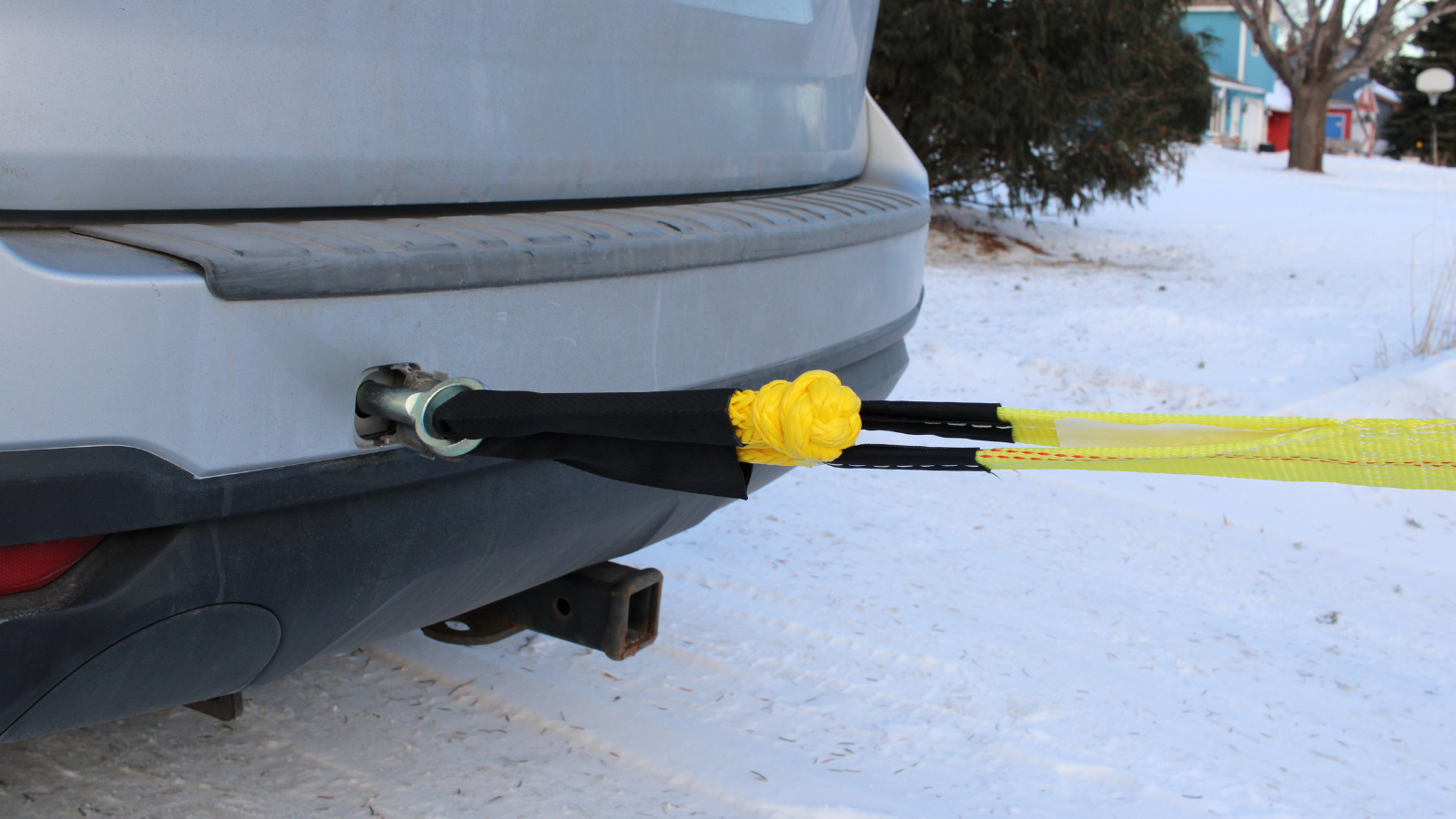
Tow Strap & Shackles: These items require experience and caution to use, but short of a tow-truck they’re the last resort in the do-it-yourself toolbox to pull a car from a snowbank. It’s important to load the tow strap gradually and not have the towing vehicle yank on it as this can cause the strap to snap. Also, don’t loop a tow strap over a ball hitch as the strap can slip off under tension causing a dangerous situation. Use a tow eye instead.
Traction Aids: A traction aid could be as simple as a can of cat litter you keep in your car or as elegant as pre-manufactured pieces of rectangular molded plastic with texture that are designed to go under your tires when they start slipping. These items can give you the extra grip needed to get you and your car out of a slippery situation.
Grand Forks Winter Driving Tips: Prepare Your Car for Winter
Windshield Wiper Blades: If your wiper blades are skittering and skipping across your windshield during milder months, they certainly won’t do you any favors when the mercury drops. It’s best to replace them!
Test Your Battery: Maybe you’ve already taken this article to heart and have a pair of jumper cables already ordered. If so, good! A good way to prevent you needing them is to have your battery tested and replaced if it’s failing.
Check Tire Condition/Tread Depth: Having tires in good condition with adequate tread depth is critical to your car’s handling in the winter. Tire Rack suggests a minimum of 5/32nds of an inch of tread for snowy conditions.
Use the Correct Washer Fluid: It’s no fun when in an attempt to clean a dirty windshield the washer fluid freezes instantly. It’s even less fun if the reservoir and lines that dispense the stuff also freeze. Make sure that your washer fluid can handle the correct temperature range.
Test Your Antifreeze: It’s important to test your antifreeze in preparation for winter to ensure it won’t freeze when the temperature falls below freezing. You can buy a tester at an auto parts store or have this done when you take your vehicle to the mechanic.
Grand Forks Winter Driving Tips: Some Local Auto Shops to Highlight
A few local shops worth mentioning in case you’re on the hunt are Olson Auto Shop, Driscoll’s Auto Service, and of course local auto parts shops like AutoZone, as well as O’Reilly Auto Parts.
Good luck out there and drive safe!


ABOUT THE AUTHOR
Hello, I’m Eli! I’m a young professional that boomeranged back to Grand Forks in January of 2024. I’m originally from Maple Grove, Minnesota but I fell in love with Grand Forks during my time at UND. After graduating in 2017 I moved back to the Twin Cities to pursue career opportunities. Fortunately for me, I was offered a position at Minnkota Power Cooperative and had the opportunity to move back to Grand Forks! In my free time you can find me making full use of the Greenway. I love to run, bike, cross country ski and hike. I also enjoy snapping photographs, watching movies, and taking in the various events and other entertainment that Downtown has to offer.
MORE FROM ELI
MORE ARTICLES LIKE THIS
Don’t miss an article!
Subscribe to our newsletter to get updates on the stories about the cooler things to see, enjoy, and experience in Greater Grand Forks!